
Guardians of Democracy: Judicial Independence and the Balance of Power Panel Discussion
Panelists bios
 Judge John Winslow Bissell (ret.) was appointed by President Reagan in 1982 to the United States District Court for the District of New Jersey, where he served through 2005. From 2001 to 2005, he was Chief Judge of that Court. Born in Exeter, New Hampshire, Judge Bissell earned his B.A. from Princeton in 1962, followed by an L.L.B. from the University of Virginia School of Law in 1965. After clerking with New Jersey U.S. District Court Judge Arthur S. Lane, he joined Pitney, Hardin and Kipp in Newark (1966 to 1969) before becoming an Assistant United States Attorney for the District of New Jersey (1969 to 1971). Thereafter, he returned to private practice until he was appointed in 1978 by Governor Brendan Byrne to the Essex County District Court, beginning his twenty-seven year jurist career. Subsequent to his retirement from the U.S. District Court, he joined Connell Foley LLP in Roseland, New Jersey as Counsel, where he served both as Chair of the firm’s Alternative Dispute Resolution Department and as a member of the Business Litigation practice groups until his retirement in 2014. Judge Bissell served as Chair of the Board of Directors of the National Association of Sports Officials and is the recipient of numerous awards including the 2005 John F. Gerry Memorial Award from the Camden County Bar Association, the 2005 Association of the Federal Bar of the District of New Jersey William J. Brennan, Jr. Award, and a Lifetime Achievement Award from the Seton Hall University School of Law Public Interest Network.
 The Honorable Bernice B. Donald was nominated to the United States Court of Appeals for the Sixth Circuit by President Barack Obama in December 2010 and confirmed by the Senate in September 2011 by a vote of 96-2. She became the first African American woman to serve on the Sixth Circuit Court of Appeals. Judge Donald retired from the court in January 2023 and currently serves as a mediator for JAMS. Before joining the Sixth Circuit, Judge Donald was appointed by President William J. Clinton in 1995 to the United States District Court for the Western District of Tennessee, becoming the first African American woman to serve on that court. She previously served as a judge of the United States Bankruptcy Court for the Western District of Tennessee from 1988 to 1996, the first African American woman in U.S. history to hold that position. In 1982, she was elected to the General Sessions Criminal Court in Memphis, becoming the first African American woman to serve as a judge in the State of Tennessee. During more than three decades on the federal bench, Judge Donald presided over complex bankruptcy, commercial, insurance, ERISA, labor and employment, and malpractice matters, as well as cases arising under numerous federal statutes. Judge Donald received her J.D. from the University of Memphis Cecil C. Humphreys School of Law and an LL.M. from Duke University School of Law. A national and internationally recognized legal scholar and lecturer, she has taught and trained judges and lawyers across the United States and around the world on issues including judicial ethics, insolvency law, case management, and alternative dispute resolution. Judge Donald has held numerous leadership positions in the American Bar Association and the National Bar Association, including serving as Secretary of the ABA, the first African American woman elected to that office. She is a past president of the National Association of Women Judges and has received more than 100 awards recognizing her contributions to the legal profession and public service.
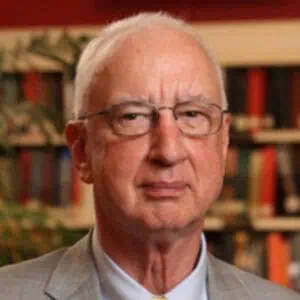 Judge Paul R. Michel served on the US Court of Appeals for the Federal Circuit from 1988 until retiring in 2010. He was appointed by President Reagan. From 2004 to 2010, he was chief judge. He simultaneously served on the Judicial Conference of the United States and, by appointment of the Chief Justice, its 7-judge executive committee. His judicial tenure followed long service in the Executive and Legislative branches. He ran investigations as Deputy District Attorney in Philadelphia under Arlen Specter, then supervised a Watergate Special Prosecutor investigation of President Nixon’s slush fund operated by Bebe Rebozo and Rosemary Woods, following which Judge Michel was an assistant counsel for the Senate Intelligence Committee (Church Committee), Korea gate prosecutor and Deputy Chief of the Public Integrity Section and later Associate Deputy Attorney General, both in the US Department of Justice. Immediately before appointment to the bench, he was counsel and chief of staff to Senator Arlen Specter. Since retiring for the courts, he consulted in major litigations, conducting mediations, arbitrations, and moot courts, also serving as an expect witness. He authored scores of articles on legal issues and spoke at dozens of conferences all around the US and abroad. He was educated at Williams College and the University of Virginia Law School.
Moderator bio
 Mike Schaengold is the volunteer Executive Director of the Article III Coalition. Mike specializes in government contracts litigation, investigations and counseling, and in litigation before the U.S. Court of Appeals for the Federal Circuit and the U.S. Court of Federal Claims (“COFC”). He is a Shareholder in the Washington, D.C. office of an international law firm. His government contracts dispute and bid protest experience includes the successful litigation of major cases before the Government Accountability Office (“GAO”), the COFC, the Federal Circuit and the boards of contract appeals. Mike serves on the Advisory Boards to The Government Contractor and Pub K Law. He was appointed by four Federal Circuit Chief Judges to that Court’s Advisory Council and has been appointed by three COFC Chief Judges to that Court’s Advisory Council. He currently serves on the COFC Advisory Council and, from 2004-2010, was Co-Chair of the Federal Circuit Advisory Council. He has authored or co-authored more than 90 articles on government contracts, GAO, COFC and Federal Circuit topics. He is also a regular speaker on government contracts topics. He has been selected as a top Government Contracts attorney by Chambers USA, Super Lawyers, Lexology Client Choice Awards, Who’s Who Legal (Government Contracts & Thought Leaders: USA), Legal 500, and Washingtonian magazine. He served as an Associate Editor to the ABA’s Public Contract Law Journal and to The Federal Circuit Bar Journal and has published articles in those journals. From 1986 to 1988, Mike served as a law clerk on the COFC and, subsequently, on the Federal Circuit to Judge H. Robert Mayer. He earned a B.A. from Dickinson College and a J.D. from the University of Virginia School of Law.
Tickets: $25 nonmembers, $20 members (members use the walk code provided in your acknowledgement letter)
VIRTUAL Option – Register for the Free virtual event if you are unable to come.
- Aug 29, 2026
- 3:30 pm - 6:00 pm
Cost
- $25 nonmembers, $20 members (members use the walk code provided in your acknowledgement letter)

- 11350 Constitution Highway, Montpelier Station, VA 22957
- https://www.montpelier.org/venues/david-m-rubenstein-visitor-center/